
By Ellie
I’ve seen how vitamin D plays a foundational role in multiple body systems often in ways patients don’t expect.
Many individuals assume they’re getting enough vitamin D through diet or occasional sun exposure. In reality, deficiency and insufficiency are extremely common, especially in modern lifestyles shaped by indoor work, seasonal changes, stress, and digestive challenges.
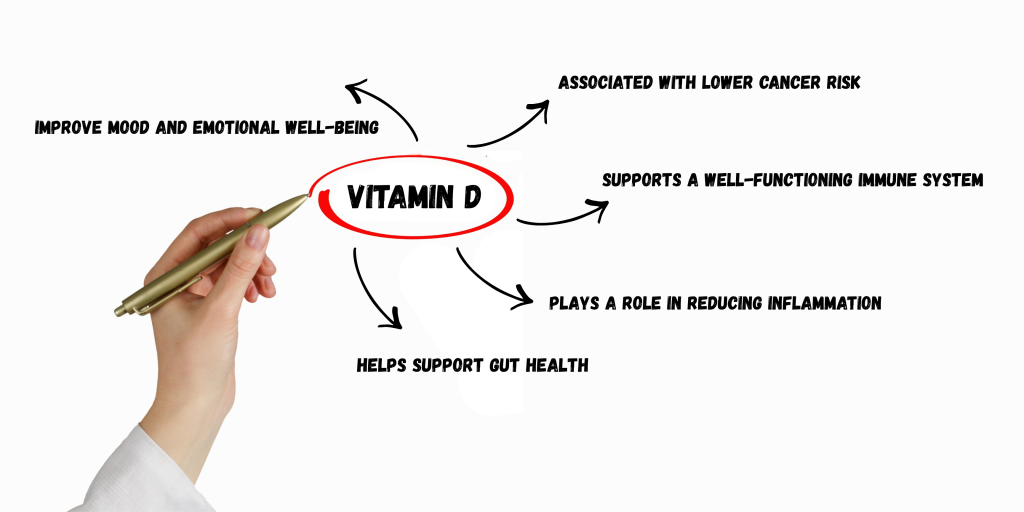
From gut health to immune balance, inflammation control, mood regulation, and even long-term disease risk, vitamin D quietly supports critical processes that help the body stay resilient.
Five key reasons why vitamin D is essential for overall health, based on both scientific understanding and what we commonly observe in clinical settings.
1. Vitamin D Helps Support Gut Health
When people think about gut health, probiotics and fiber usually come to mind. Vitamin D, however, is an often overlooked but essential player in maintaining a healthy intestinal environment.
Vitamin D receptors are widely distributed throughout the gastrointestinal tract. This means vitamin D actively participates in maintaining the integrity of the gut lining, sometimes referred to as the “intestinal barrier.” A healthy barrier helps regulate what passes into the bloodstream and supports balanced immune activity within the gut.
From a clinical perspective, low vitamin D levels are frequently observed in individuals experiencing digestive discomfort, irregular bowel habits, or increased gut sensitivity. While vitamin D is not a standalone solution, adequate levels appear to support a more stable gut environment by:
- Helping maintain tight junctions between intestinal cells
- Supporting communication between gut microbes and the immune system
- Contributing to overall digestive resilience
In simple terms, vitamin D helps the gut do its job more effectively absorbing nutrients while maintaining balance.
2. Vitamin D Plays a Role in Reducing Inflammation
Inflammation is a natural and necessary response in the body. However, when inflammation becomes chronic or poorly regulated, it can contribute to fatigue, joint discomfort, metabolic imbalance, and long-term health issues.
Vitamin D is involved in immune signaling pathways that help regulate inflammatory responses. Rather than “shutting down” inflammation, vitamin D supports balance allowing the body to respond appropriately without remaining in a constant state of alert.
Clinically, individuals with low vitamin D levels often present with signs associated with persistent low-grade inflammation, such as:
- Generalized body aches or stiffness
- Slow recovery from physical or mental stress
- Ongoing fatigue despite adequate rest
By supporting immune modulation, vitamin D helps the body distinguish between when to activate inflammation and when to resolve it. This balance is critical for long-term health and daily comfort.

3. Vitamin D Supports a Well-Functioning Immune System
Vitamin D’s relationship with immune health is one of its most well-researched roles. Immune cells – including T cells, B cells, and antigen-presenting cells contain vitamin D receptors, highlighting how closely vitamin D is involved in immune regulation.
Rather than simply “boosting” immunity, vitamin D helps fine-tune immune responses. It supports the body’s ability to respond to external challenges while also promoting immune tolerance and balance.
In clinical settings, individuals with insufficient vitamin D levels may experience:
- Increased frequency of infections
- Prolonged recovery times
- Reduced resilience during periods of stress
Vitamin D contributes to immune readiness by supporting both innate and adaptive immune responses. This is especially relevant during seasonal changes, periods of high stress, or times when the body’s defenses are already under strain.
4. Vitamin D Is Associated With Lower Cancer Risk
Research has increasingly explored the relationship between vitamin D levels and cancer risk. While vitamin D is not a treatment for cancer, adequate levels appear to support cellular regulation processes that are essential for long-term health.
Vitamin D plays a role in:
- Supporting normal cell growth and differentiation
- Helping regulate cell signaling pathways
- Contributing to programmed cell turnover
Observational studies have noted associations between adequate vitamin D levels and reduced risk of certain cancers, including colorectal and breast cancers. From a clinical perspective, vitamin D is often considered part of a broader preventative health strategy rather than a single protective factor.
Maintaining appropriate vitamin D levels supports cellular health and regulation, key components in reducing long-term disease risk.
5. Vitamin D May Help Improve Mood and Emotional Well-Being
The connection between vitamin D and mood is something many patients are surprised by, yet it’s commonly observed in practice.
Vitamin D receptors are present in areas of the brain involved in mood regulation. Low vitamin D levels have been associated with mood changes, low motivation, and seasonal emotional shifts, particularly in regions with limited sunlight exposure.
Patients often report improvements in:
- Mental clarity
- Emotional stability
- Overall sense of well-being
once vitamin D levels are corrected and maintained.
While vitamin D is not a replacement for mental health care, it serves as a physiological foundation that supports emotional resilience especially when combined with adequate sleep, nutrition, and stress management.

Why Vitamin D Deficiency Is So Common Today
Despite its importance, vitamin D deficiency is widespread. Several modern factors contribute to this:
- Limited sun exposure due to indoor lifestyles
- Seasonal variations, especially in northern climates
- Reduced absorption related to gut health or aging
- Increased physiological demand during stress or illness
Diet alone often provides only small amounts of vitamin D, making it difficult for many individuals to maintain optimal levels without intentional assessment and support.
This is why measuring vitamin D status and addressing individual needs has become an important part of precision health approaches.
A Precision Health Perspective on Vitamin D
From a precision health standpoint, vitamin D is not a one-size-fits-all nutrient. Individual needs vary based on factors such as lifestyle, genetics, gut health, immune demand, and baseline levels.
Rather than focusing solely on supplementation, precision health emphasizes:
- Assessing current vitamin D status
- Understanding how it interacts with other systems
- Integrating vitamin D support into a broader health strategy
This approach helps ensure vitamin D is used effectively and safely as part of long-term wellness planning.
Conclusion
Vitamin D supports far more than bone health. Its role in gut function, inflammation regulation, immune balance, cellular health, and mood makes it a cornerstone nutrient for overall well-being.
In clinical practice, optimizing vitamin D levels often creates a ripple effect, supporting multiple systems at once and helping individuals feel more resilient in daily life.
If you’ve been experiencing low energy, frequent illness, digestive concerns, or mood changes, vitamin D status may be one piece of the larger picture worth exploring.
Contact Us
If you’re interested in understanding your vitamin D status or how personalized health strategies can support long-term wellness, our team is available to discuss your health concerns and explore appropriate next steps.
Contact us to schedule a consultation or learn more.
Earn up to 40% commission per sale—join our affiliate program now!
https://shorturl.fm/m70kC
https://shorturl.fm/TFtkm